Yes for day-to-day admin if categories, required fields, and moderation rules stay simple. Usability fails when you add fields and plugins faster than you test mobile publish. Fewer support tickets means sellers post without hand-holding, buyers find listings through working filters, and admins clear moderation during spikes.
Track form abandonment, moderation backlog age, and mobile upload errors. When a metric moves, change config: field requirements, category names, or policy copy.
Multi-vendor and paid promotions add checkout steps. Keep publish, pay, and order or promotion status labels identical in the theme, emails, and admin notes. Enable selling for all users only after moderation capacity and refund policy are written down; otherwise start with an explicit seller list.
Osclass Pay covers Featured (Premium), Highlight, and Move to Top, plus membership groups. Pair each with duration text on the promotion page. Sellers who buy Premium without knowing how long it lasts open the same ticket class as buyers who never see a shipping status change. Fee detail: monetization playbook.
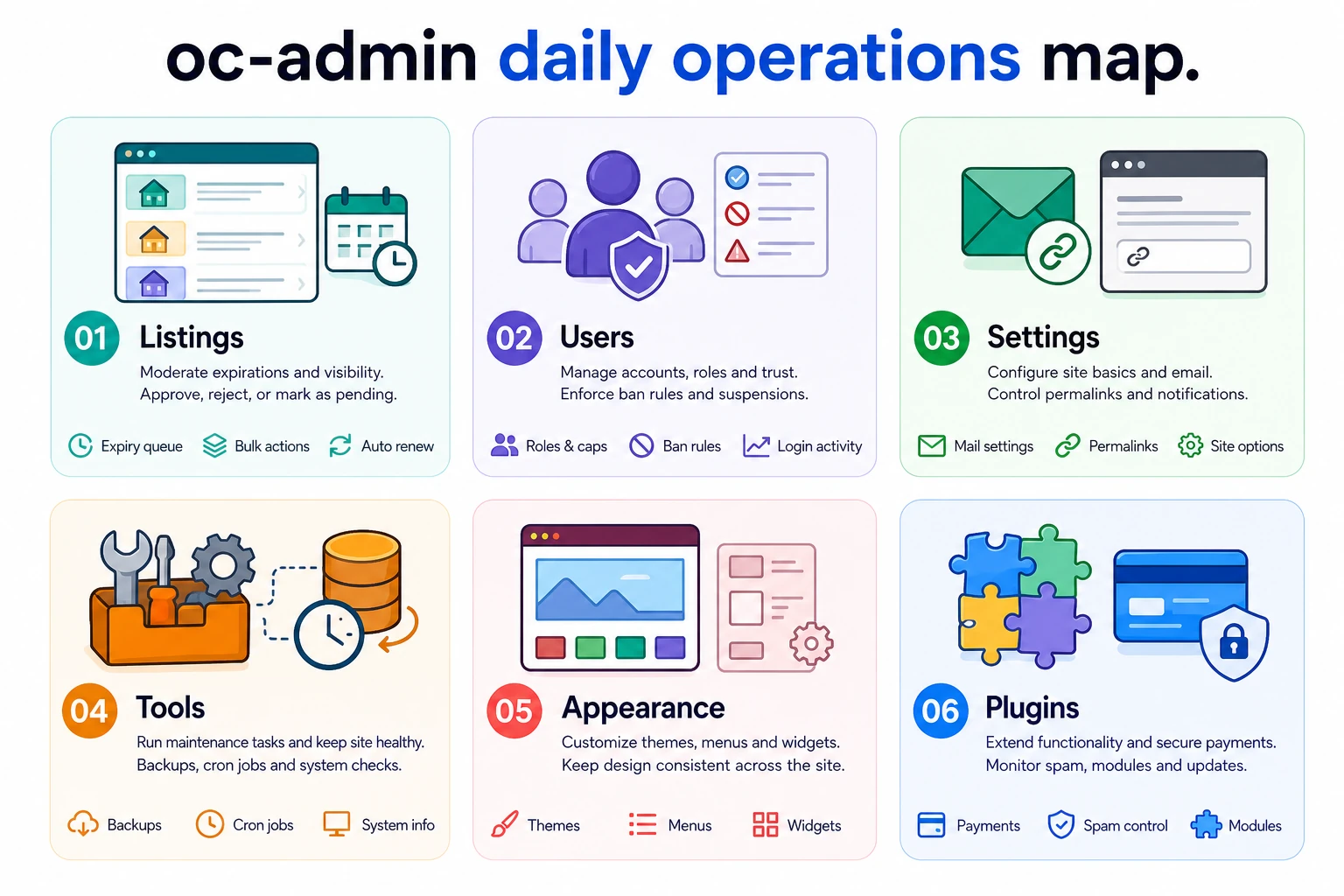
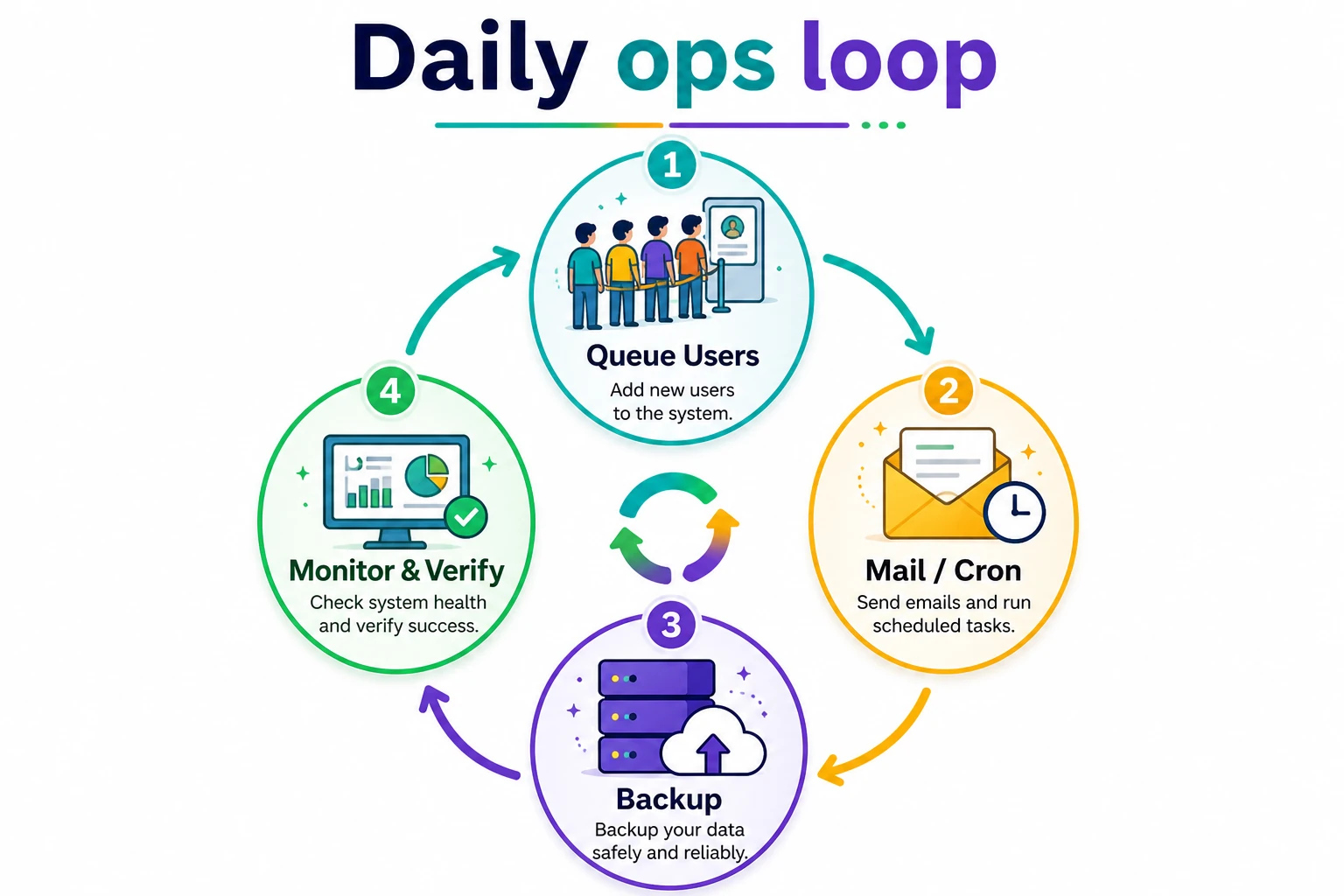
Approving a listing is two clicks from the moderation queue under Listings: open the item, review fields and images against posting rules, then approve or reject with a short reason sellers can reuse. Neither task requires a file edit or a database console.
Category and field work lives in Settings > Categories. Adjust name, parent, enabled state, and attach custom fields (text, number, select, checkbox, URL) with required or optional. Prefer select/number for anything buyers must filter; do not require free-text buyers cannot facet. Existing listings keep their data unless a custom field is removed. Reparenting after launch can orphan saved filters; draft taxonomy on staging first.
Plugin install runs from Plugins (or Market after an OsclassPoint API key under Settings > General > Software Updates). For Osclass Pay, set promotion prices and durations in plugin settings, then connect Stripe or PayPal via separate gateway plugins. Switching themes without a staging pass often breaks custom field display order even when definitions stay the same. After cache or CDN changes, retest publish and the user dashboard as a logged-in seller. Changing subdomain type signs users out so cookie domains can reset.
| Metric | What it reveals |
|---|---|
| Time to first listing from new account | Onboarding friction |
| Form abandonment rate by category and device | Fields or layout that block publishing |
| Moderation queue aging and decision throughput | Review capacity vs. incoming volume |
| Support ticket volume by workflow step | Where users get stuck without asking for help |
| Search refinement rate before contact action | Whether filters actually match buyer intent |
| Failed payment callback count and time to reconcile | Whether paid visibility state matches gateway success |
Review weekly. If median pending age exceeds 24 hours, tighten reject reasons and Require Admin Approval scope before hiring more moderators.
Prefer shallow category trees and required fields that buyers actually filter on. One helper string per required field should name the failure mode (for example "Year must be four digits"). Attach fields per category from Settings > Categories so vehicles do not show job-only inputs.
Mobile checks: image upload on a throttled connection with retry-safe errors; required validation visible without scrolling off-screen; user dashboard at about 375px width. Slow publish or search feels like a usability bug even when copy is fine. Confirm Automatic CRON is off and Cron execution history advances; keep web and CLI PHP on the same minor. Prefer osc_get_countries() over non-optimized loaders. Set OSC_CACHE for concurrent browse traffic; never cache logged-in account widgets as static HTML.
php -v to web PHP.Launch with publish, search, and moderate working. Add plugins and fields when metrics show a clear need. Quarterly: remove low-ticket fields, merge confusing categories, rewrite in-form helpers from top ticket themes; check Cron execution history, web vs CLI PHP, flush OSC_CACHE after taxonomy edits, and run one EXPLAIN on the slowest category filter page. Retest one paid promotion callback after any proxy, SSL, or CDN change. Staging, backup, changelog, and rollback before each release. Code changes that support these workflows: customization guide (hooks and child themes).
If help pages get traffic but users still open tickets on the same topic, rewrite the in-form helper first. Keep a short canned-reply set for the top five ticket types (how to promote, why pending, how expiry works, how to change category, how payments reconcile). That set usually cuts repeat tickets faster than another FAQ page.

This article was last updated on 15. October 2026.