A founder picks "vintage furniture" as a niche because a Facebook group for it has 40,000 members, builds the category tree in a weekend, and finds six months later that sellers post once and never come back because there is no reason to list on a site instead of the group they already trust. Teams that chase search volume alone end up with spam, weak listings, and unclear fees. A workable niche has stable listing fields, sellers who post again, and buyers who know what they are looking for.
If pending items stay above what one moderator can clear in under 24 hours for a week, the niche scope is too wide for the current team. Cost modeling: launch planning and the production deployment guide.
Osclass stores categories as a hierarchy and attaches custom fields per category (or globally) from Listings > Custom Fields. Each field has a type (text, dropdown, checkbox, number, URL, and similar), a required flag, and optional Allow Search. If buyer decisions cannot map into those types, filters stay weak.
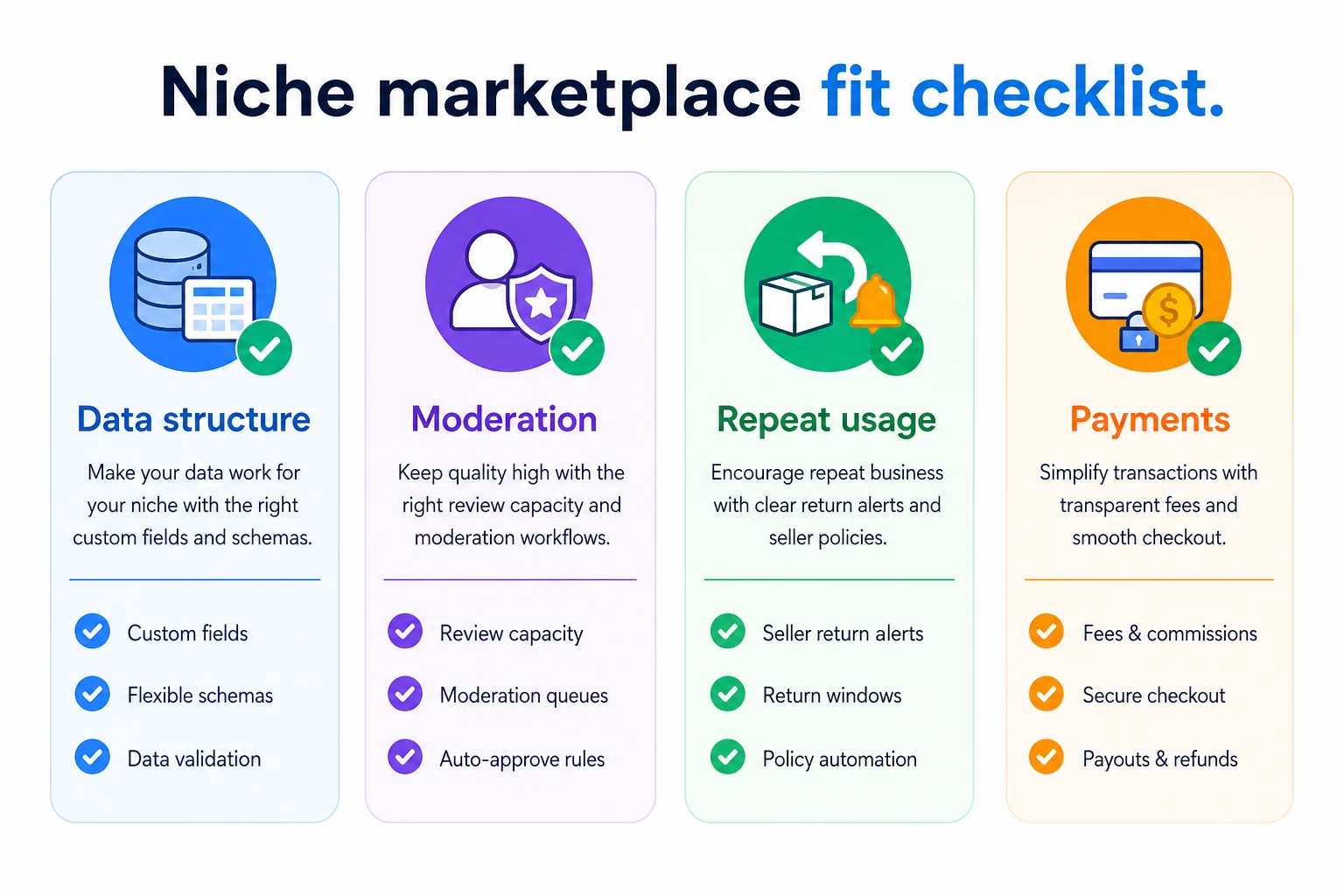
Fail any one check and trend traffic will not save the niche. Reparenting categories after launch orphans field attachments and breaks saved filters; draft taxonomy in staging first.
oc-content/uploads. Full taxonomy, make/model mapping, and plugin setup: used-car board taxonomy.All four use the same mechanism: custom fields per category, required/optional flags, and nesting deep enough for separate forms. Skip niches that need matrix SKUs, calendars, or multi-unit inventory Osclass fields cannot express without heavy custom plugins. Broad "everything" trees with mixed field names break facets and create thin filter URLs.
Image-heavy verticals (vehicles, rentals) need upload limits and disk under oc-content. Jobs and services often need messaging plus stronger registration. High-value niches need payment callbacks and a manual reconcile path. Enable Allow Search only on filters buyers use; set category moderation day one; document one fee SKU per first vertical. Hosting, cron, and PHP-CLI: shared VPS or cloud. Fees: turn on paid visibility.
Triage: category and field schema, moderation status filters (active, pending, expired, spam), cron last run, then payment callbacks. Theme tweaks rarely fix niche-fit failures.
Broad portals need more ad spend, more moderators, and more compliance work. One vertical usually means fewer categories, fewer fee SKUs, and a smaller pending queue. Nested categories under one top-level vertical keep custom field sets coherent and URL trees shorter.
Turn on one Osclass Pay promotion (Featured, Top of Category, or Highlighted) in the first vertical only after inventory exists and contact rate is above zero. Category posting fees and memberships wait until sellers see replies. Expand only after publish, search, moderation approve/reject, and payments work in that vertical.
Quarterly review: active listings, contact rate, seller retention, disputes, support ticket types. New verticals pass staging for taxonomy, custom field attachments, Allow Search only where needed, moderation, payment callback, and expiry via cron. Keep rollback when changing category structures. After adding a vertical, check the new category pages by hand; empty filter combinations stay noindex so crawl stays on pages with inventory.

This article was last updated on 9. September 2026.